Welcome! I really enjoy exchanging information with people and love that this blog helps with that. I consider much of my research as a work in progress, so please let me know if you have conflicting information. Some of the surnames I'm researching:

Many old Cape families including Kelley, Eldredge/idge, Howes, Baker, Mayo, Bangs, Snow, Chase, Ryder/Rider, Freeman, Cole, Sears, Wixon, Nickerson.
Many old Plymouth County families including Washburn, Bumpus, Lucas, Cobb, Benson.
Johnson (England to MA)
Corey (Correia?) (Azores to MA)
Booth, Jones, Taylor, Heatherington (N. Ireland to Quebec)
O'Connor (Ireland to MA)
My male Mayflower ancestors (only first two have been submitted/approved by the Mayflower Society):
Francis Cooke, William Brewster, George Soule, Isaac Allerton, John Billington, Richard Warren, Peter Browne, Francis Eaton, Samuel Fuller, James Chilton, John Tilley, Stephen Hopkins, and John Howland.
Female Mayflower ancestors: Mary Norris Allerton, Eleanor Billington, Mary Brewster, Mrs. James Chilton, Sarah Eaton, and Joan Hurst Tilley.
Child Mayflower ancestors: Giles Hopkins, (possibly) Constance Hopkins, Mary Allerton, Francis Billington, Love Brewster, Mary Chilton, Samuel Eaton, and Elizabeth Tilley.

Sunday, June 24, 2018

Peter Browne 1595-1633 of Surrey and Plymouth

Peter Browne was baptized 26 January 1595 at Dorking, Surrey, son of William Browne.  I need to confirm, but I would think he was baptized at St. Martin's Church, an Anglican parish church in Dorking, Surrey. Surviving parts of the structure date back to the Middle Ages. It is in the archdeaconry of Dorking, in the Diocese of Guildford. His last name is also spelled Brown. He is my 11th great-grandfather on my grandfather Arthur Washburn Davis’ side of the family, although I have not submitted my line to the Mayflower Society.

St. Martin's, Dorking, Surrey

He was a young man of 25, one of the “strangers,” when he boarded the Mayflower. He brought along his English Mastiff dog.

The Browne family appears to have had several associations with the Mullins family of Dorking, who also came on the Mayflower. 

The Pilgrims were unsettled by the far off presence of Indians when they first landed at Plymouth. They would see smoke from Indians' fires in the distance. Work was interrupted for several days when Peter Browne and John Goodman went missing one noontime while gathering thatch for the common house roof. A party searched the woods until dark but didn't find them and they were afraid the Indians had killed them. Peter and John were near a pond when their dogs, a large Mastiff (Browne's) and a small Spaniel, raised a big buck which went bounding into the woods. The men tried to follow but were soon winded and lost. They wandered around in a cold drizzle that turned to snow. They lay on the cold ground to sleep and were awoken by two lions roaring, so they dashed for the nearest tree, intending to climb if attacked. The Mastiff kept trying to go after the lions. The next day they climbed a hill and saw the bay, which gave them their bearings. They stumbled into camp after dark. Goodman's shoes, which were worth their weight in gold, had to be cut from his swollen, frost -bitten feet. They soon learned the “lions” were actually wolves!

In a partial list of the house locations of the Pilgrims made out in 1620, John Goodman and Peter Browne appear to have been neighbors on the south side of the Street and the ocean side of the Highway.  Peter Browne was apparently still living there during the 1623 Division of Land.
 
Abt. 1626 he married the widow Martha Ford whose maiden name is unknown.  She came in 1621 on the Fortune, giving birth soon after landing. Peter and Martha had two children: Mary and Priscilla. The latter perhaps named after Mayflower passenger Priscilla Mullins who was also from Dorking. Martha would die soon after giving birth, I descend from Mary.

Mary, born about 1626, married Ephraim Tinkham, had 8 children and remained in Plymouth. Priscilla, born about 1628, married William Allen and moved to Sandwich.
 
Peter Browne's Tankard, at Pilgrim Hall Museum
In 1623 Plymouth land division "Peter Browen" received one acre as a passenger on the Mayflower (PCR 12:4). In 1627 Plymouth cattle division Peter Brown, Martha Brown and Mary Brown were the fourth, fifth and sixth persons in the eighth company (PCR 12:11).

In the 1627 Division of Cattle he, Peter, his wife Martha, his daughter Mary Browne, and his stepchildren John and Martha Ford were included with the Samuel Fuller and Anthony Annable families.  About a year later, Peter and Martha would have daughter Priscilla but wife Martha would die shortly thereafter. 

Peter Brown was on the 1633 Plymouth list of freemen ahead of those made free on 1 Jan 1632/33 (PCR 1:4). He was assessed 18 s. in Plymouth tax list of 25 March 1633 (PCR 1:10); Widow Brown assessed 9 s. in list of 27 March 1634 (PCR 1:28).

Peter married, second, Mary whose maiden name is also unknown and had two more children: Rebecca born about 1631 and a child born about 1633. name unknown, who did not live to adulthood. 

Rebecca married William Snow and lived in Bridgewater.

The evidence for the marriages of Peter Brown's three daughters is largely from deeds in which his land was sold by his sons-in-law, with the consent of his daughters.

Peter Browne's brother John Browne came to America about 1632 and settled in Duxbury, just to the north of Plymouth.  John Browne was baptized in Dorking on 29 June 1600.

Gov. Bradford wrote that "Peter Browne married twice. By his first wife he had two children who are living and both of them married, and the one of them hath two children. By his second wife he had two more. He died about sixteen years since."

Peter died between 25 March and 10 October 1633 at Plymouth, likely in the fall when there was a general sickness in town. He was just 38 years old. Mayflower passengers Samuel Fuller (Peter’s neighbor) and Francis Eaton, both my ancestors, and several other Plymouth residents died at that time.

His estate inventory taken 10 October 1633 shows that he owned 130 bushels of corn, six melch goats, one cow, eight sheep, and a number of pigs, and a Bible, among other things. The Bible indicates he could read. His widow Mary Browne was granted administration. He died without a will leaving “diverse children by diverse wives,” his estate amount to 100 pounds.

In his estate records, Peter’s daughter Mary is mentioned as having been placed with John Doane of Plymouth for the past nine years and was to stay with him until age 17. Widow was to pay down 15 pounds to Doane for “the use of Mary Browne, daughter of said Peter.” She was also to pay down 15 pounds to Mr. William Gilson for the use of Priscilla Browne, another daughter of Peter.  It mentions the widow having two children by the said Peter together with her own third, so she must have been married before Peter. Sadly, I appears placed her step-daughters with other families when Peter died.
                                                                                                                      
Peter Browne and his family bring home to me the danger of living in Plymouth in the 17th century—illness, lack of comforts of home and the cold winter climate. He died as a young man in his 30s and he had already buried two wives and possibly one of his children. I wonder though if he regretted coming to Plymouth. He owned land, which likely wouldn’t have happened back in England and experienced a lot more freedom in Plymouth. After his death his children by his first wife were put out to other families, something I find very sad.   

My line from Peter Browne:
Peter Browne and Mary (____) (Ford)
Mary Browne and Ephraim Tinkham
Helkiah Tinkham and Ruth (_____)
 John Tinkham and Anne Gray
Ann Tinkham and Samuel Fuller
Mary Fuller and Jabez Nye
Desire Nye and David Pierce
Lucy Nye Pierce and Rowland Sturtevant Bumpus
Mary Briggs Washburn and Seth Washburn
Charles F. Washburn and Hattie Benson
Carrie C. Washburn and George Brewster Smith (unmarried)
Arthur Washburn Davis (changed his surname from Washburn to Davis)
My parents
Me

Famous descendants of Peter Browne: Dick Van Dyke, the Beach Boys (Brian, Dennis and Carl Wilson).

Sources Not Listed Above:
Caleb Johnson, The Probable English Origin of Mayflower Passenger Peter Browne, And His Association with Mayflower Passenger William Mullins, The American Genealogist vol. 79 (July 2004)
Robert Charles Anderson, The Great Migration Begins, Immigrants to New England 1620-1633, Vol, 1, 1995
Mrs. John E. Barclay, The Widow Martha Ford, The American Genealogist, vol. 42, 1965
William Bradford’s Of Plymouth Plantation
Robert S. Wakefield, Mayflower Families Through Five Generations. Volume Seven, Vol. 7: Peter Brown, 1992
George F. Willison, Saints and Strangers, 1945

Wednesday, April 11, 2018

John Bell born ca 1610 and died before 20 September 1700, of Sandwich, Harwich and Yarmouth, Mass.


I know very little about John Bell. He was born ca 1610 (based on probable ages of his daughters) but his origins and parentage are unknown to me. He is my 9th great-grandfather on my grandmother Milly (Booth) Rollins’ side of the family.

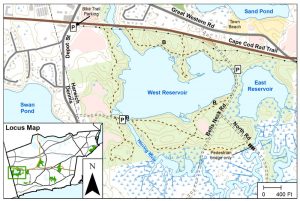
He was of Sandwich when he was gifted land near Nobscusset from the Indian Little Robin on 16 December 1668. In 1721, well after his death, there was a controversy regarding the boundaries of this land. The owner of the property to the west and Samuel and John Berry of Harwich, both claimed ownership of the land. The boundary dispute over this tract of land, later named Bell’s Neck, was settled by John Paine of Eastham, Peter Thatcher of Yarmouth and Shubael Gorham of Yarmouth. His probate information mentions him being of Yarmouth, so he likely lived there late in life, perhaps while being cared for by his daughter and son-in-law.

Map showing Bell's Neck, Harwich source: Harwich Conservation Trust


John Bell was of Sandwich by 1643 when he was on the list of men able to bear arms. He left Sandwich for Harwich, perhaps through the influence of Wing and Dillingham who had done the same.

His wife’s name is unknown but from his probate information we know she predeceased him and that they had two daughters: Elizabeth and Mary. Elizabeth married Richard Berry before January 1682 when their first child was born. Mary married Samuel Nickerson who was born about 1638. I don’t know Mary and Elizabeth’s birth dates but Elizabeth’s husband Richard was born in in 1654 and Mary’s husband Samuel was born ca 1638, so perhaps there was a substantial gap between their births and other children were born to John and his wife that did not survive. I descend from Elizabeth who lived in Yarmouth and then Harwich.

John Bell died before 20 September 1700 when the estate inventory was taken by John Miller and Gershom Hall. On 3 October 1700 letters of administration in probate court were granted to son-in-law Samuel Berry of Harwich, but John had died some years before. He and his wife were taken care of by Samuel Berry. He for three years and she for five years. He left a small estate. Land from Little Robin on east side of Herring River was valued at 11 pounds, 11 shillings.

He is rarely mentioned in records. He was one of 12 men who in 1668 laid out a way.
In 1690 his house is mentioned in a deed. 

Herring River near Bell's Neck source: Harwich Conservation Trust


From Barnstable County Probate Records, 2:112:

On 3 October, 1700, "Samuel Berry of Harwich" was appointed administrator of the estate "of John Bell formerly of Yarmouth .... who died Intestate." The Inventory of the estate of John Bell .... taken by John Miller and Gershom Hall" 27 September, 1700; "one halfe of the Land gave to sd John Bell by little Robin lying on the aster side of the herring River in Harwich prized att" £11. 10s.; "1 Cow that Samuel Nickersons Daughter had" £2, 10s.; "1 yearling that Samuel Berrys Daughter had" £2.
"Samuel Berry Demands for thre(e) years tending and diets of his sd Father in law John Bell 8£ þ yeare" £24; "And for dietting sd Bells wife 5 years" £15; "Funerall charge of sd Bell and wife £2.”

On 27 September, 1700, Samuel Berry made oath to the inventory.

On 2 October, 1700, the estate of John Bell, "who died Intestate Some years since" was settled; after payment of debts and "Charge of sd Deceased sickness and long Languishing lying", "the Remainder .... If any be shall be Equally divided .... unto .... his two Daughters to say Elizabeth Berry and Mary Nickerson."

If anyone can fill in any of the many holes in my John Bell story, I would very much appreciate hearing from you!

Sources:

Vernon R. Nickerson, From Pilgrims and Indians...," manuscript

Josiah Paine, History of Harwich, Barnstable, Massachusetts, 1620-1800, 1937

Garrett M. Tunison, History of the Herring River, report, 1997

Sunday, March 25, 2018

Edward Bumpus b. ca 1603, England to Plymouth to Duxbury to Marshfield, Mass.


Edward Bumpus, also seen as Edouad Bompasse and a bunch of other variations to the last name including Bump and Bumpas, was born about 1603. I’ve been hesitant to write about him as my Bumpus family is very much a work in progress, but I’d like to share what I have thus far. Edward is likely my 9th great-grandfather on my Grandfather Arthur Washburn Davis’ side of the family.

Edward’s last name is of French origin. Jeremy D. Bangs writes that he was probably Walloon and the correct spelling of his name would have been Bonpas. He came to Plymouth as a young man in November 1621 on the ship Fortune.

According to George Willson’s Saints and Strangers, he was a “Saint” who was with the Pilgrims at Leiden, Holland, so must have shared their Separatist beliefs.  Edward received one acre in the 1623 land division at Plymouth as he was a passenger on the Fortune. In 1627 he received a share of the cattle as part of Isaac Allerton’s company, indicating he was single. He wasn’t on the 1633 list of Freeman, which was unusual.

About 1630 Edward married Hannah, whose maiden name is unknown, and they had at least twelve children, first eight being recorded at Marshfield. This list is by no means set in stone!

1.      Sarah born 9 March 1631
2.      Elizabeth born 9 March 1633
3.      John born 02 Jun 1636
4.      Edward born 15 Apr 1638, died unmarried
5.      Joseph born 15 Feb 1639(?/40)
6.      Isaac born March 1642 who likely died young
7.      Jacob born 25 March 1644
8.      Hannah born 03 Apr 1646, died unmarried
9.      Philip born abt. 1648
10.  Thomas born about 1660
11.  Mary born about 1652
12.  Samuel b. about 1654, died unmarried, fighting in King Phillip’s War in 1675

Savage gives them a daughter Faith born ca 1631. Others say that Faith may have been a twin to Sarah and that she died at birth or shortly after. Others say there is no evidence of a daughter Faith.

For years I believed I descend from Thomas who married in 1679 Phebe Lovell, eldest daughter of John Lovell of Barnstable. From the Bumpus genealogy and other sources, I thought my line then went: Samuel who married Joanna Warren, Thomas who married Mercy Stewart, Jonathan who married Martha Chubbuck, Rowland who married Lucy Nye Pierce. Unfortunately it has been found that Jonathan, who was from Wareham, was not the son of Thomas and Mercy. So while I know they connect back to Edward Bumpus somehow, I’m not certain exactly how. I wrote about Jonathan and Martha here. and Rowland and Lucy here, here and here.

Edward sold his acre of Plymouth land in 1628 and was granted 20 acres of land on Duxbury Bay where he built a house. In March of 1634/35 he sold his Duxbury property to John Washburn and was allowed to "take up land in another place.” In March of 1644/45 when the boundaries of Marshfield were laid, his property was included. A map showing the 1637 location of settlers’ homes in Duxbury shows Edward and Hannah's home near the Marshfield line, by Duck Hill River, with no other homes nearby.

Sometime before September 1645 Edward sold his property to Solomon Lenner. On the 15 July 1653 Edmond Chandler of Duxbury exchanged his rights in lands in Satuckquett (Satucket=Brewster?) for Edward Bumpus's lands and rights in Cushenett and Coaksett (Westport and Dartmouth?). In 1655, with the consent of his wife Hannah, Edward Bumpus of Marshfield sold to Edmond “Chandeler” of Duxbury, the Duck Hill land lying between the lands of John Rouse (Rose?) and the lands of Edmond Chandeler.

Some researchers have him as one of the original proprietors of Middleborough, but I don’t think that is accurate. Or perhaps he had land there but did not settle there. 

Edward wasn’t much for public service. He is included in the 1643 list of men able to bear arms at Marshfield. He was on the jury in 1654 and 1655 and took the oath of fidelity at Duxbury in 1657.
                              
After 1656 he seems to have lost control of his properties and through lack of support in the family he and his wife Hannah were to some extent dependent upon the community for their well-being. In 1656 Edward was described as "one of the town's poor" and was loaned a cow. In 1663 there was a contribution for his relief with 12.5 bushels of corn collected from townspeople. Some people mentioned him in their wills, leaving him corn and wheat. Hannah was placed in the Winter and Hewitt families to be taken care of in her old age.

Although Edward and his sons as "first borne in the colony" were eligible for grants, they did not take advantage of their positions. However in the next generation several branches of the family prospered and left good estates. It is quite strange to me that Edward and Hannah had a large family yet none of them took care of their parents. It makes me wonder if they were difficult people who drove their kids away, but it doesn’t seem that way since townspeople were kind to them. That Edward started out as a landowner and ended up as a poor man indicates to me he either suffered from poor health or made bad decisions.                                           
From Marshfield Town Meeting records: 14 August 1683 the inhabitants have voted that Christopher Winter shall demand & receive into his custody the goods of Edward Bumpus & his wife, which is at Joseph Rose's, their bedding & clothes and what is theirs only for the said persons to enjoy for their comfort & benefit during their lives and Edward & his wife shall have power at their death to dispose of what is left of it to their children or otherwise as they care. 

There is one case in Plymouth records concerning the abuse of parents by their own child. This is the case of Edward Bumpas, who was brought to court on 4 July 1679 for "striking and abusing his parents" for which he was whipped at the post (PCR 6: 20). However, it states in the record that "hee was crasey brained, otherwise hee had bine put to death or otherwise sharply punished.” Abusing one's parents was a very serious crime in Plymouth Colony according to this statement.

Edward and Hannah had other hardships to endure with their children. 8 June 1651 John Bumpus, who would have been just 15 years old, was sentenced to be whipped for "idle and lacivius behavior."

On 10 June 1662 Thomas Bird was sentenced to be whipped twice for making adulterous attempts on Hannah Bumpus and she was sentenced to be publicly whipped for yielding to him and not making such resistance as she should. Bird was also to pay 10 pounds to her as part satisfaction for the wrong he had done her. I assume this was Hannah the daughter of Edward and Hannah and not the elder Hannah. She is also referred to as “distracted” in another record, so perhaps she had some issues as well as her brother Edward.

Marshfield records the deaths of Edward and Hannah: "Hannah, widow of old Edward Bumpuas, died 12 Feb 1693." Edward's death is unrecorded but he died before 5 Mar 1683/84 when Hannah is named as the Widow Bumpus in the will of Martha (Winter) Hewitt.


Sources Not Listed Above:

Jeremy Dupertuis Bangs, Strangers and Pilgrims, Travellers and Sojourners, Leiden and the Foundations of Plymouth Plantation, GSMD, 2009

Lynn Albert Bumpus, A Genealogy of the Descendants of Eduoad Bompasse of the Ship Fortune, 1986

Eugene Stratton, Plymouth Colony, Its People and History, 1986

Mrs. John E. Barclay The Bumpus Family of New England, TAG 43:65 (April 1967)

Carle Franklin Bumpus, Bompasse, Bumpas, Bump, Bumpus and Allied Families 1621-1981, rev. 1985

Jason Jordan, Domestic Violence in Plymouth Colony, Historical Ethnography, April 1998

Amos Otis, Genealogical Notes of Barnstable Families, being a reprint of the Amos Otis Papers, originally published in the Barnstable Patriot, Volume 1 and 2, 1888