Welcome! I really enjoy exchanging information with people and love that this blog helps with that. I consider much of my research as a work in progress, so please let me know if you have conflicting information. Some of the surnames I'm researching:

Many old Cape families including Kelley, Eldredge/idge, Howes, Baker, Mayo, Bangs, Snow, Chase, Ryder/Rider, Freeman, Cole, Sears, Wixon, Nickerson.
Many old Plymouth County families including Washburn, Bumpus, Lucas, Cobb, Benson.
Johnson (England to MA)
Corey (Correia?) (Azores to MA)
Booth, Jones, Taylor, Heatherington (N. Ireland to Quebec)
O'Connor (Ireland to MA)
My male Mayflower ancestors (only first two have been submitted/approved by the Mayflower Society):
Francis Cooke, William Brewster, George Soule, Isaac Allerton, John Billington, Richard Warren, Peter Browne, Francis Eaton, Samuel Fuller, James Chilton, John Tilley, Stephen Hopkins, and John Howland.
Female Mayflower ancestors: Mary Norris Allerton, Eleanor Billington, Mary Brewster, Mrs. James Chilton, Sarah Eaton, and Joan Hurst Tilley.
Child Mayflower ancestors: Giles Hopkins, (possibly) Constance Hopkins, Mary Allerton, Francis Billington, Love Brewster, Mary Chilton, Samuel Eaton, and Elizabeth Tilley.

Sunday, May 7, 2017

The Pilgrims and Natives First Encounter


In Governor William Bradford’s account of the Pilgrims’ arrival in America, Of Plymouth Plantation, he described the first extended contact between the recently arrived Mayflower passengers and a group of Native Americans (believed to be Nausets). On December 7, 1620, a group of men, led by Captain Myles Standish, left the Mayflower as it was anchored off Provincetown for some exploration and foraging. The next morning, they were surprised by a group of Native Americans—arrows flew and shots were fired, but no harm resulted. They had experienced a long night pierced by the “hideous and great cry” of what seemed to be “a company of wolves or such like wild beasts.” In the early morning, the exploring party was confronted by another “great and strange cry, which they knew to be the same voices they heard in the night.” This time, however, a returning scout exclaimed that the voices were not animals but “Men, Indians! Indians!”
Bradford’s next paragraph is an action-packed account, featuring flying arrows and firing muskets, repeated charges and counter-charges, swinging cutlasses and hatchets. 

The Pilgrims’ superior weaponry eventually enabled them to chase off the Natives, but Bradford attributed the victory to a different source:
Thus it pleased God to vanquish their enemies and give them deliverance; and by His special providence so to dispose that not any one of them was either hurt or hit, though their arrows came close by them and on every side of them; and sundry of their coats, which hung up in the barricade, were shot through and through. Afterwards they gave God solemn thanks and praise for their deliverance, and gathered up a bundle of their arrows and sent them into England afterward by the master of the ship, and called that place the First Encounter.

This First Encounter took place at what is now called First Encounter Beach in Orleans on Cape Cod. I’ve been curious to see the spot and stopped there while on the Cape last weekend. I was struck by what a beautiful and peaceful spot it is—there were wind surfers in the distance and a few people walking their dogs or sitting and enjoying the sun and bracing sea air. It is hard to imagine it as the site of such a violent exchange. There is a stone with a plaque attached identifying it’s history, but the plaque is now hard to read.

From an earlier photograph of the plaque I can read the names of the Mayflower men who were involved in the skirmish:
Myles Standish, John Carver, William Bradford, Edward Winslow, John and Edward Tilley, John Howland, Richard Warren, Stephen Hopkins, Edward Dotey/Doty, John Allerton, Thomas English, Master Mate Clarke, Master Gunner Conn (?) and Three Sailors of the Mayflower Company. Of these men, Richard Warren, John Howland, John Tilley, and Stephen Hopkins are my direct ancestors.

source: Eastham Historical Society


There is (or was) another plaque at the site which I did not see on my visit, shown on the postcard below. 
source: DigitalCommonwealth.org

I had my seven-month old grandson with me and it was his first encounter with a beach. Gave me a bit of a thrill! I’ve certainly turned into a history/genealogy nerd!


Monday, May 1, 2017

Austin/Augustine Bearse born ca 1618 Possibly Southampton, England, lived Barnstable, Mass.


Austin (also seen as Augustine) Bearse (also seen in many other variations including Bearce) was born ca 1618, possibly in or near Southampton, England. He may be my 11th great-grandfather on my grandmother Milly (Booth) Rollins’ side of the family. I need to do more research on this connection.

He immigrated at age 20 on the ship Confidence of London, leaving Southampton, England on 24 April 1638. He came to Barnstable with the first company in 1639 and was admitted freeman there in May 1653. He was a member of Rev. Lothrop’s church and listed as a member there on 29 April 1643. His name rarely occurs in records, which shows he wasn’t overly involved in public service but that he also wasn’t the subject of legal squabbles which were so common. He served as a grand juror in 1653 and 1662 and a surveyor of highways in 1674.  

His wife’s name is not known, but some say her first name was Mary.

The couple had 11 children, born and recorded in Barnstable:

Mary b. 1640, baptized 6 May 1643
Martha b. 1642, baptized 6 May 1643
Priscilla b. 10 March 1643/4, baptized 11 March 1643/4, (it has been suggested she married Deacon John Hall Jr of Yarmouth but there isn't proof of this)
Sarah b. 28 March 1646, baptized 29 March 1646, married John Hamblin of Barnstable
Abigail, born 18 Dec 1647, baptized 19 Dec, 1647, married Allen Nichols of Barnstable
Hannah b. 16 Nov 1649, baptized 18 Nov 1649
Joseph b. 25 Jan 1651/2, baptized the same day, m. Martha Taylor. He was probably a soldier in King Philip's war as his sons had land rights in the town of Gorham (later Maine)
Lydia born end of Sept 1655
Rebecca b. Sept 1657
James born end of July 1660

I descend from his daughter Priscilla.  

There have been stories that Austin was a Gypsy (his mother called a gypsy princess) and that he was deported as a criminal from England. The story goes that none of the white women were interested in him because of his dark skin, so he married Native American Princess “Little Dove” Hyanno, daughter of Chief Iyyanough. This is always a subject that gets a lot of people fired up, as they strongly believe the legend or feel it’s just a myth. It seems to me that since he was a church going man, living in Barnstable, with children who married into the best English families, that it is impossible he was a gypsy and his wife was a Native American. Whenever I read “princess” to do with an ancestor, I immediately see red flags. There is also no evidence the ship Confidence held any prisoners. The early settlers weren’t exactly an open minded lot and wouldn’t have accepted a gypsy who married a Native American, who by the way was a criminal, into their church and community!

Bearse's home at 38 Church Hill Road, Centerville (from Zillow) 

The Cape Cod Genealogy Society Bulletin, Spring 2003, has a map showing locations of first century houses in the town of Barnstable which shows the home of Austin Bearse, a full Cape, at 38 Church Hill Road, Centerville. A walking map of historic Centerville by the Centerville Historic Society Museum also indicates the house is at 38 Church Hill Road and was built by Bearse ca 1686. Their is also a half-Cape on the property, but perhaps that was moved to the property; something to investigate. A road from his house to Hyannis is still called Bearse’s Way. His house lot contained twelve acres of rocky land and was in the westerly part of the East Parish. He also owned six acres of meadow and two thatch islands.

There is no record of his death or estate settlement, but he Otis wrote he was living in 1686 and died before 1697. 

I haven’t read it, but researcher Dale Cook said there is a thorough but hard-to-find work on this family is an unpublished typescript by Fanny Louisa (Steed) Meadows, assisted by Jennie M. Ames, Genealogical Records of Austin Bearse (or Bearce) of Barnstable, Cape Cod, Massachusetts, U.S.A. A.D. 1638 to A.D. 1933 ... (Cleveland, OH: 1933; Supplement 1939).

Sources:
Vernon R. Nickerson, From Pilgrims and Indians... manuscript
Charleen Bearce Lambert, Cape Cod and Main Connections: A Bearce/Bearse Example, Cape Cod Genealogy Society Bulletin, vol 2., no 1, Spring 2012
Amos Otis,  Genealogical Notes of Barnstable Families, being a reprint of the Amos Otis Papers, originally published in the Barnstable Patriot, revised by CF Swift, Volume 1 and 2, Barnstable, MA, The Patriot Press, 1888
Donald Lines Jacobus, Austin Bearse and His Alleged Indian Connections, The American Genealogist, Vol. 15, 1938

Sunday, March 12, 2017

Richard Berry died Sept 1676 Yarmouth Part II

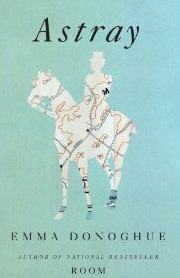
I recently read the book Astray by Emma Donoghue, which includes a story inspired by 17th century Massachusetts citizen Richard Berry. Richard is my 9th great grandfather; I wrote a post about him here. 
Astray by Emma Donoghue

Astray is a collection of short stories published in 2012. Donoghue takes an old newspaper article or record and fleshes it out into a story. So it is fiction inspired by a true event. I really like this idea as it's what I tend to do (in my mind) when I'm researching ancestors. The story about Richard is called The Seed, and takes place in Cape Cod, 1639. She writes the story in first person, as if he's writing in a journal. He comes across as very religious and petty, someone who would spy and tattle on neighbors. He judged their misdeeds harshly and believed in severe punishments, even more harsh than what the courts would ordinarily dole out. He was someone who was disliked neighbors in his Yarmouth community. She also implies that he had homosexual yearnings based on the "uncivil living together" court record. He writes as if Teague was coming onto him and thus made a charge of sodomy against him. He also had a dream that Teague was in bed with a woman, Sarah Norman, and accused them in court. He changed his mind when he realized he had actually welcomed Teague's advances and was whipped for committing perjury.

In the story Richard talks of all the people who have died in Yarmouth, including the wife of Teague Jones, whom he calls a godly man whose field is next to his. He doesn't like the new settlers who don't give credit to the first comers who built the town. He was aware of his neighbors' dislike for him and said that Teague was the only one who had much to say to him.

Donoghue sites her inspiration as Plymouth Colony court records and a book by Kenneth Borris: Same-Sex Desire in the English Renaissance, 2004. She wrote that in 1659 Richard Beare of Marshfield, whom she assumes was Richard Berry, was found guilty of "filthy obscene practices" and banished from the colony. She does not mention anything about Richard being married to a woman named Alice whom he had 11 children with, some of whom were born after 1659. I do wonder if Richard Beare of Marshfield is the same man as Richard Berry of Yarmouth.

If I were to write a story inspired by Richard's life, it would be quite different from Donoghue's. But I enjoyed reading the story and appreciate cousin Katharine Reid pointing it out to me. It got me thinking more about what people's lives were like in the early years of Plymouth Colony. Life was so closely governed by the Church and was so intolerant and strict in hindsight. It seems to me that people sometimes turned in their neighbors for perceived sins and misdeeds as a way of survival that was somewhat based in paranoia--get them before they get me. And if God was punishing people for their sins, perhaps they deserved what bad things befell them. And if Satan was working through weak people, then who might be under his spell?

Anyway, it's all interesting to think about!