Welcome! I really enjoy exchanging information with people and love that this blog helps with that. I consider much of my research as a work in progress, so please let me know if you have conflicting information. Some of the surnames I'm researching:

Many old Cape families including Kelley, Eldredge/idge, Howes, Baker, Mayo, Bangs, Snow, Chase, Ryder/Rider, Freeman, Cole, Sears, Wixon, Nickerson.
Many old Plymouth County families including Washburn, Bumpus, Lucas, Cobb, Benson.
Johnson (England to MA)
Corey (Correia?) (Azores to MA)
Booth, Jones, Taylor, Heatherington (N. Ireland to Quebec)
O'Connor (Ireland to MA)
My male Mayflower ancestors (only first two have been submitted/approved by the Mayflower Society):
Francis Cooke, William Brewster, George Soule, Isaac Allerton, John Billington, Richard Warren, Peter Browne, Francis Eaton, Samuel Fuller, James Chilton, John Tilley, Stephen Hopkins, and John Howland.
Female Mayflower ancestors: Mary Norris Allerton, Eleanor Billington, Mary Brewster, Mrs. James Chilton, Sarah Eaton, and Joan Hurst Tilley.
Child Mayflower ancestors: Giles Hopkins, (possibly) Constance Hopkins, Mary Allerton, Francis Billington, Love Brewster, Mary Chilton, Samuel Eaton, and Elizabeth Tilley.

Sunday, March 12, 2017

Richard Berry died Sept 1676 Yarmouth Part II

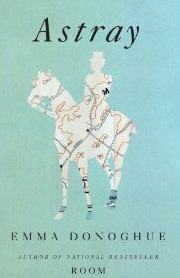
I recently read the book Astray by Emma Donoghue, which includes a story inspired by 17th century Massachusetts citizen Richard Berry. Richard is my 9th great grandfather; I wrote a post about him here. 
Astray by Emma Donoghue

Astray is a collection of short stories published in 2012. Donoghue takes an old newspaper article or record and fleshes it out into a story. So it is fiction inspired by a true event. I really like this idea as it's what I tend to do (in my mind) when I'm researching ancestors. The story about Richard is called The Seed, and takes place in Cape Cod, 1639. She writes the story in first person, as if he's writing in a journal. He comes across as very religious and petty, someone who would spy and tattle on neighbors. He judged their misdeeds harshly and believed in severe punishments, even more harsh than what the courts would ordinarily dole out. He was someone who was disliked neighbors in his Yarmouth community. She also implies that he had homosexual yearnings based on the "uncivil living together" court record. He writes as if Teague was coming onto him and thus made a charge of sodomy against him. He also had a dream that Teague was in bed with a woman, Sarah Norman, and accused them in court. He changed his mind when he realized he had actually welcomed Teague's advances and was whipped for committing perjury.

In the story Richard talks of all the people who have died in Yarmouth, including the wife of Teague Jones, whom he calls a godly man whose field is next to his. He doesn't like the new settlers who don't give credit to the first comers who built the town. He was aware of his neighbors' dislike for him and said that Teague was the only one who had much to say to him.

Donoghue sites her inspiration as Plymouth Colony court records and a book by Kenneth Borris: Same-Sex Desire in the English Renaissance, 2004. She wrote that in 1659 Richard Beare of Marshfield, whom she assumes was Richard Berry, was found guilty of "filthy obscene practices" and banished from the colony. She does not mention anything about Richard being married to a woman named Alice whom he had 11 children with, some of whom were born after 1659. I do wonder if Richard Beare of Marshfield is the same man as Richard Berry of Yarmouth.

If I were to write a story inspired by Richard's life, it would be quite different from Donoghue's. But I enjoyed reading the story and appreciate cousin Katharine Reid pointing it out to me. It got me thinking more about what people's lives were like in the early years of Plymouth Colony. Life was so closely governed by the Church and was so intolerant and strict in hindsight. It seems to me that people sometimes turned in their neighbors for perceived sins and misdeeds as a way of survival that was somewhat based in paranoia--get them before they get me. And if God was punishing people for their sins, perhaps they deserved what bad things befell them. And if Satan was working through weak people, then who might be under his spell?

Anyway, it's all interesting to think about!


Sunday, January 15, 2017

Nathaniel Browning and Sarah Freeborne of 17th Century Portsmouth, Rhode Island

**Sketch updated 3/1/2025**

Nathaniel Browning was the progenitor of one of Rhode Island’s oldest families. His name first appears in Rhode Island records in 1645 when he purchased a house and two lots of land in Warwick, Rhode Island, for three pounds of wampum. He is my 8th great-grandfather on my Grandmother Milly (Booth) Rollins’ side of the family. This information on Nathaniel is still a work in progress.

In William Richard Cutter’s 1908 book Genealogy of the Brownings of America, he writes that Nathaniel was born about 1618 in London, the son of Mrs. Elizabeth Browning, from a family of non-conformists, likely Puritans.This is based on a Mrs. Elizabeth Browning marrying second John Palmer, who names his wife’s sons Nathaniel and William Browning in his 1631 will and their supporting silenced ministers.

Nathaniel was of Portsmouth, Rhode Island, in 1655.  He settled there on Aquidneck Island. 
Modern-day Aquidneck Island, connected to mainland by three bridges


Nathaniel married, by about 1650, Sarah Freeborn/Freeborne, the daughter of William and his second wife Mary (Perk[in?]e) Freeborn. She was baptized St. Mary, Maldon, Essex, England, on 2 October 1631. She was age two in the 1634 passenger list of the ship Francis which sailed from Ipswich, England, to Boston. Her father signed the Portsmouth, Rhode Island, Compact and was one of the town’s founding fathers. On 2 January 1652 she was deeded a gift of land from her father, as Sarah wife of Nathaniel Browning.

Nathaniel and Sarah’s children:

Mary, born after 1652, married Thomas Manchester Jr. prior to 6 Jan 1677/78 and had at least two sons, William and Thomas.

Sarah, born after 1652, died before 6 Jan 1677/8 when the estate of "Sarah Browning, single woman, late of Portsmouth" was divided by the Portsmouth Town Council among her brothers and sisters, namely, Mary, wife of Thomas Manchester Jr., William Browning when 21, sisters Rebecca and Jane when married or age 16.
William born after 1657
Rebecca born after 1662
Jane born after 1662

I descend through son William who married Rebecca Wilbore/Wilbur. I wrote about that couple here.

Nathaniel Browning was made a Freeman in Portsmouth in 1654.

On 4 May 1670 Nathaniell Browninge of Portsmouth received 20 pounds of Gidion Freeborne of the same town, in full satisfaction of the legacy given to my children by their grandfather William Freeborne of Portsmouth late deceased. I will do my best to improve upon the money to benefit my children and deliver each of them an equal share when they are capable of making use of the same. Signed by his mark.

Sarah died 23 April 1670 at age 38.  There may have been a serious illness outbreak as her father died 28 April 1670 and her mother 3 May 1670.

Nathaniel Browning's will, made by the Portsmouth Town Council, 4 April 1673, so he died in the early 1670s, in his early 50s. Five children are mentioned: Mary, Sarah, William, Rebecca and Jane, all under age and unmarried but Mary the eldest soon to come of age. Land given by William Freeborne to the deceased and Sarah his wife by deed 2 Jan 1652/53 mentioned and also the estate given to the children by their grandfather William Freeborne. Executors: Gideon Freeborne and Clement Weaver of Newport "both nearly related to the said children.”

Inventory of the estate of Nathaniel Browning was taken 11 March 1672/73 by Thomas Manchester, Thomas Fish, William Wilbor, Robbert Hassard and William Hall. Amounted to over 192 pounds.


Sources Not Listed Above:

William Richard Cutter, Genealogy of the Brownings in America, vol. 1 and 2, 1908 and 1913
Torrey's New England Marriages
Rhode Island Roots, Rhode Island Genealogical Society, vol. 22, March 1996
The American Genealogist, Vol 20, 1943 (from the RI Historical Soc. Collection, Vol. 21, p. 128)
Randy A. West, NEHGS Register, “William 1 Freeborn, of Roxbury and Boston, Massachusetts, and Portsmouth Rhode Island: An Update,” Vol 177, No. 708, p 395-8 (Fall 2023)

Sunday, August 28, 2016

George Lawrence (1637-1709) and Elizabeth Crispe (1637-1681) of Watertown, Mass.


George Lawrence was born about 1637 in Watertown, Middlesex Co., Mass.  His parentage is unknown but some people give him as the son of John and Elizabeth Lawrence, among the earliest settlers of Watertown. John did not name a son George in his will, so it seems unlikely he was his father. George is my 9th great-grandfather on my grandmother Milly (Booth) Rollins’ side of the family.

George Lawrence married Elizabeth Crispe at Watertown on 29 September 1657 (Watertown Vital Records). Elizabeth was the daughter of Benjamin and Bridget Crispe, born 8 January 1636/37 in Watertown (Watertown Vital Records).

George and Elizabeth had a large family of 12 children, birth order uncertain: Elizabeth, Judith, Hannah, John (died young), Benjamin, Daniel, George, Mercy, Sarah, Martha, Grace and Mary.
I descend through their daughter Mercy who married William Baker and moved to Yarmouth, Mass. I wrote about that couple here.

On 11 Sept. 1668, John [Nicholas] Cady, of Groton, and wife Judith, sold to George Lawrence, 6 acres of upland, and 5 acres of meadow, in Watertown.

On 25 November 1697, Ephraim Wheeler, of Newton, and wife Sarah, sold to George Lawrence, 8 acres in Watertown.

Elizabeth Crispe Lawrence died 28 May 1681 in Watertown (Watertown VR), age 44.

George married, second, Elizabeth, possibly widow of John Holland, on 16 August 1691 (Watertown VR). He and Elizabeth had three children: Joseph and twins Rachel and Patience. Patience must have died young as she’s not mentioned in her father’s 1707 will.

On 3 November 1691, George Lawrence was excused by the Court from serving as Constable, "in that he could not read a word."

On 27 February 1697/98 he and wife Elizabeth conveyed 10 acres of land in Watertown to Rev. John Emerson, of Charlestown, who immediately assigned it to Benjamin and Daniel Lawrence, twin sons of George.

George Lawrence, husbandman, wrote his will in 1707, leaving bequests to his wife Elizabeth, two youngest children Joseph and Rachel, sons George, Benjamin and Daniel, daughter Mercy Baker living at Yarmouth, daughter Grace Edes at Charlestown, daughter Elizabeth Whitney at Stow, daughter Hannah Sawtel at Groton, daughter Judith Stearns of Cambridge Farms, daughter Mary Flagg, daughter Sara Rider, daughter Martha Dix, granddaughter Mary Earl. His sons Daniel and George were appointed administrators at the request of the widow.  His will includes mention of his Watertown dwelling house, new barn, 30 acres of adjoining land, 10 acres of woodland, other parcels of land, cattle, swine, and corn. He signed his will with his mark.

George died 21 March 1708/09 in Watertown, Mass, “an aged man.”  (Watertown VR) He was about 72 years of age.

An inventory of his estate was dated 5 April 1709 and totaled over 171 pounds.

Sources Not Listed Above:
Henry Bond, Genealogies of the Families of the Early Settlers of Watertown, Mass., 1860
Robert Charles Anderson, The Great Migration Begins, 1995